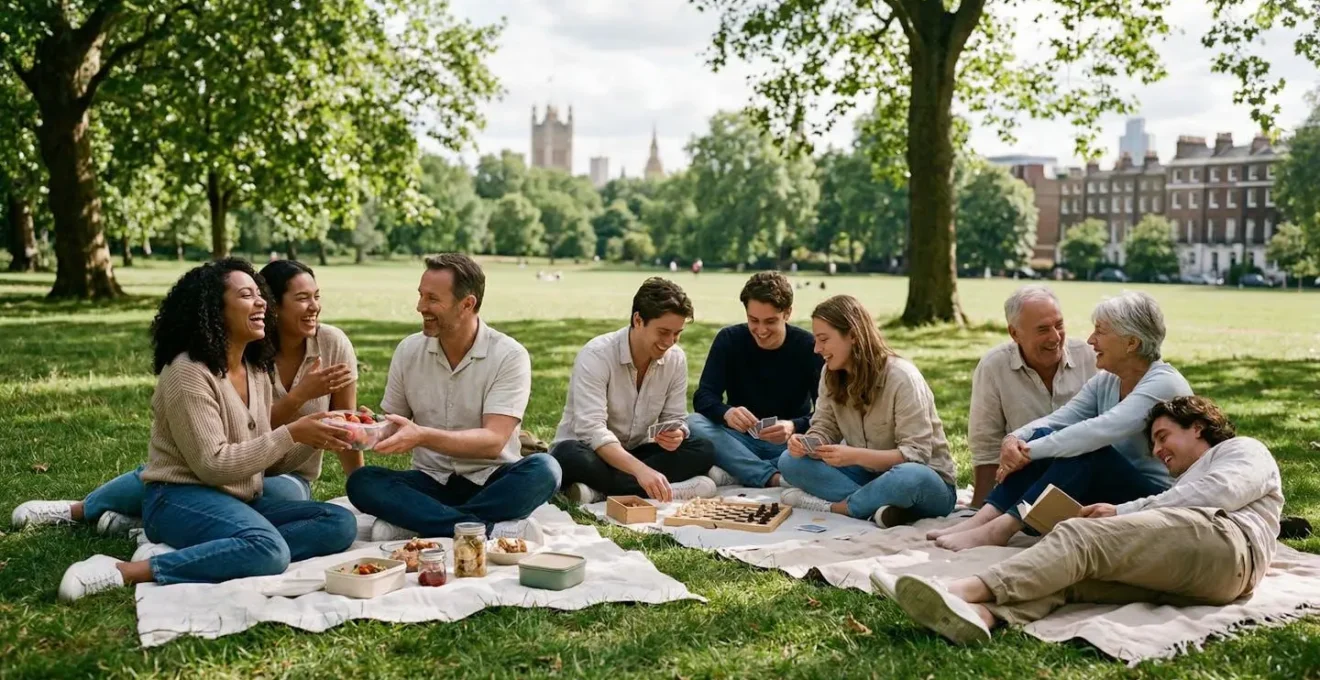
In summary:
- Building deep, lasting LGBTQ+ friendships in London means shifting focus from passive social spaces (like clubs) to active, purpose-driven activities.
- Volunteering, mentorship, and joining specific interest groups create stronger bonds based on shared values and goals, not just proximity.
- Authentic community is built intentionally by seeking out inclusive spaces, becoming a better ally, and exploring connections beyond the central London “bubble”.
London is a vibrant, sprawling metropolis, a global beacon for LGBTQ+ people. Yet, for many gay men, a strange paradox emerges: you can be surrounded by millions of people and still feel profoundly alone. The default advice often points towards the neon lights of Soho or the endless scroll of dating apps, but these environments are frequently designed for fleeting encounters, not the deep, supportive connections that form a “found family.” The laughter in a loud club can feel hollow when what you truly crave is a quiet coffee with someone who just *gets it*.
The common solutions—clubbing, apps, even the big annual Pride parade—can leave you feeling like you’re on a constant, exhausting first date. You’re performing, trying to be witty and attractive, hoping to stumble upon a meaningful connection. This approach is a lottery, and it often overlooks the most fertile ground for friendship. It’s easy to feel like you’re doing something wrong when, in reality, you might just be looking in the wrong places with the wrong strategy.
But what if the key wasn’t about finding the right *place*, but about finding a shared *purpose*? This guide is built on a different premise: that the most resilient and rewarding friendships are forged not by chance in a crowded bar, but by choice in a collaborative setting. It’s about moving from passive socialising to intentional community building. We’ll explore how to architect a support network by investing your time and energy into activities that foster genuine bonds.
This article will guide you through concrete, actionable strategies for building that network. We will delve into the power of mentorship, the community-building magic of volunteering, and how to engage with the city’s queer landscape—from its outer boroughs to its Pride events—with intention and a clear goal: finding your people.
In This Guide: Building Your London LGBTQ+ Found Family
- Why You Need a Gay Mentor Regardless of Your Age?
- Volunteering vs Dating Apps: Which Builds Stronger Community Ties?
- How to Be a Better Ally to Trans People Within the Community?
- The Isolation Trap for Gay Men Living Outside Major Cities
- When to Engage with Pride: Protest Roots vs Corporate Party?
- Why You Should Always Meet in a Public Pub for the First Date?
- Pub or Coffee: Which Social Setting Is More Inclusive for Your Team?
- Grindr vs Hinge: Which App Actually Leads to Long-Term Relationships in London?
Why You Need a Gay Mentor Regardless of Your Age?
In our quest for peer-to-peer friendships, we often overlook one of the most powerful forms of connection: mentorship. A gay mentor isn’t just for a 22-year-old starting their career; it’s a vital relationship for a 40-year-old navigating a career change, a 55-year-old re-entering the community, or anyone seeking guidance from someone who has walked a similar path. These relationships provide a unique blend of professional guidance, personal wisdom, and a deep sense of shared identity that you simply can’t find on a dating app. The impact is tangible; research shows that LGBTQ+ mentoring programmes can lead to a significant increase in life satisfaction.
A mentor provides a safe space to discuss challenges and aspirations without the performative pressure of dating or casual socialising. It’s an intentional connection built on growth and mutual respect. This dynamic fosters a different kind of intimacy—one rooted in support and shared experience. Finding a mentor is an active step in building your “found family,” creating a foundational relationship that can offer stability and perspective. It’s about consciously adding a pillar of support to your community architecture, one that strengthens your sense of self and belonging.
But how do you find such a person? It requires a more structured approach than swiping right. It involves tapping into professional networks and community organisations that are specifically designed to foster these connections.
Your Action Plan: Finding an LGBTQ+ Mentor in London
- Identify potential mentors through London-specific LGBTQ+ professional networks like Interbank, Intertech, or the Lloyd’s LGBTQ+ mentoring programme.
- Attend industry-specific LGBTQ+ networking events to build initial connections before making a formal request.
- Frame the mentorship as a two-way learning opportunity, emphasizing what you can offer in return (e.g., fresh perspectives, digital skills).
- Make your initial approach via professional platforms like LinkedIn with a clear, specific request outlining your goals and expected commitment.
- Suggest a low-pressure initial meeting at a London LGBTQ+ community space, like the London LGBTQ+ Community Centre, to establish mutual fit.
Volunteering vs Dating Apps: Which Builds Stronger Community Ties?
Dating apps promise connection at the tap of a screen, but they often lead to a cycle of fleeting interactions based on curated profiles and high-pressure first impressions. Volunteering offers a powerful alternative. When you volunteer for an LGBTQ+ cause, the foundation of your interaction shifts from “Do I like you?” to “Let’s accomplish this together.” This is the essence of building community through shared purpose. Working alongside others towards a common goal—whether it’s stewarding a Pride parade, staffing a helpline, or organizing a community fundraiser—creates natural, low-stakes opportunities for conversation and bonding.
This approach allows vulnerability and friendship to develop organically. You see people in a real-world context: how they handle stress, collaborate with a team, and show up for their community. These are the building blocks of trust and genuine connection. The following comparison highlights the fundamental differences in how these two approaches build community.
This table, informed by the work of organisations like London Friend, clearly illustrates why one path often leads to more sustainable community ties. You move from an individualistic pursuit to a collective endeavour.
| Aspect | Volunteering (e.g., at London Friend) | Dating Apps |
|---|---|---|
| Initial Connection Basis | Shared external mission and values | Individual profiles and preferences |
| Vulnerability Building | Gradual through shared work and challenges | Upfront, individual performance |
| Time Commitment | Regular, structured (weekly/monthly) | Flexible but often sporadic |
| Community Integration | Immediate access to established networks | One-on-one connections that may not connect to broader community |
| Skills Development | Training provided, new competencies gained | Social skills only, limited structured learning |
The success of this model is evident in organisations across London. For example, the Pride in London organisation relies on over 1,000 volunteers. Participants consistently report that the experience leads to lifelong friendships and a sense of year-round purpose, demonstrating that contributing to something larger than yourself is a powerful catalyst for forming a found family.
As you can see, the environment of collaboration and shared goals creates an entirely different dynamic. It’s not about performance; it’s about participation. This shift is fundamental to building the authentic connections you’re looking for.
How to Be a Better Ally to Trans People Within the Community?
Building a true “found family” isn’t just about what you can get from the community; it’s about what you contribute to its health and safety. A welcoming community is an inclusive one, and for gay men, one of the most crucial roles we can play is that of an active ally to our trans and gender-diverse siblings. This isn’t just a moral imperative; it’s a fundamental act of community-building. When we create spaces that are explicitly safe for the most marginalized among us, those spaces become safer and more authentic for everyone. The need is urgent, as UK workplace statistics show that 39% of trans workers have had their actions or decisions undermined at work, an experience that often extends into social settings.
Being an ally goes beyond simply adding pronouns to your bio. It’s about taking tangible actions that create a culture of respect and belonging. It means listening more than you speak, using your privilege to challenge transphobia, and actively ensuring the spaces you inhabit are genuinely inclusive. This proactive stance sends a powerful signal: “This is a community where everyone is valued and protected.” This work strengthens the very fabric of our community, making it the kind of supportive network we all seek to be a part of. Here are some concrete actions you can take:
- Attend trans-led events, like T-Tuesday at London Friend, primarily to listen and learn without centering your own experience.
- Before suggesting a venue for a group meetup, proactively check if they have gender-neutral bathrooms and inclusive policies.
- Amplify trans voices by sharing events and fundraisers from London-based organizations like Gendered Intelligence or CliniQ on your social media.
- Offer to accompany a trans friend to a new space if they express safety concerns, using your presence as a buffer.
- Donate time or resources to trans-led initiatives that provide direct support, such as The Outside Project shelter for LGBTIQ+ homeless youth.
- Challenge transphobic “jokes” or comments in LGBTQ+ spaces. Your silence can be interpreted as agreement, while your voice can make a space safer.
The Isolation Trap for Gay Men Living Outside Major Cities
In a city as vast as London, “central” can feel like another country. For queer people living in Zones 4, 5, 6, and beyond, the advice to “just go to Soho” is not only unhelpful but often financially and logistically impossible. This creates a significant “isolation trap,” where the perceived heart of the community is out of reach, and local connections feel nonexistent. This is the challenge of the “Zone 1-3 Bubble”—the concentration of LGBTQ+ spaces in central London leaves many feeling stranded in queer deserts. Overcoming this requires a new map, one that focuses on cultivating local connections and leveraging digital tools to bridge the distance.
The good news is that community is not solely defined by geography. Grassroots organizations are actively working to break this bubble. By seeking out these hyperlocal initiatives, you can help build and benefit from a community right on your doorstep, proving that a vibrant queer life is possible all over London.
Case Study: The West London Queer Project’s Hyperlocal Model
The West London Queer Project (WLQP) was founded specifically to combat the disappearance of LGBTQ+ spaces from West London. Recognizing the “Zone 1-3 Bubble” phenomenon, their solution was to create a diverse calendar of hyperlocal events across multiple boroughs, from Chiswick to Ealing. They host everything from weekly football sessions and book clubs to craft circles and yoga. By rotating venues and offering activities beyond the pub, WLQP has successfully created accessible, welcoming community hubs that don’t require an expensive trip into central London. This demonstrates a powerful model: if the community isn’t where you are, you can build it there.
When to Engage with Pride: Protest Roots vs Corporate Party?
For many, the default way to engage with the queer community is to attend the main Pride in London parade. While it’s a powerful symbol of visibility and celebration, its sheer scale can make it a difficult place to forge personal connections. Standing in a crowd of thousands, it’s easy to feel more like a spectator than a participant. To build your found family, it’s crucial to think strategically about *how* you engage with Pride. The key is to shift from being a passive attendee at the main event to an active participant in smaller, more focused activities surrounding it.
Pride is not a monolith. It’s a spectrum of events, from grassroots picnics and political marches to borough-specific celebrations. Each of these offers a different potential for community building. Choosing where to invest your time and energy can dramatically change your experience, moving you from the anonymous crowd to a group of people with a shared purpose or local identity. The goal is to find the part of the Pride ecosystem that aligns with your values and your desire for authentic connection.
This framework can help you decide which type of Pride event is most likely to help you find the connections you’re seeking, based on the kinds of interactions fostered by organisations like the London LGBTQ+ Community Centre.
| Pride Engagement Type | Community Building Potential | Values Alignment Signal | Typical Participants |
|---|---|---|---|
| Main Corporate Parade | Low – Large crowds, brief interactions | Celebration and visibility | Broad LGBTQ+ community and allies |
| Borough-Specific Events | High – Smaller, local connections | Local community focus | Neighborhood residents seeking nearby connections |
| Community Picnics (e.g., in Victoria Park) | Very High – Relaxed, extended interactions | Grassroots community building | Those prioritizing authentic connections |
| Volunteer Stewarding | Very High – Working together all day | Service and activism | Community-minded individuals seeking purpose |
| Alternative Pride Events | High – Shared political values | Activism over commercialism | Politically engaged LGBTQ+ activists |
Why You Should Always Meet in a Public Pub for the First Date?
The title poses a classic piece of safety advice, and it holds true: a public place is essential for a first meeting. However, when the goal is building friendship rather than romance, we should question whether a pub is always the *best* public place. The pub environment is alcohol-centric, which can exclude sober people, those on a budget, and those who simply find it harder to connect over the noise of a crowded bar. Creating a truly welcoming space for a new friendship to blossom often means thinking beyond the pint.
Choosing an activity-based or alcohol-free venue for a first “friend date” removes the pressure and creates natural conversation starters. A walk along the South Bank, a visit to a museum, or browsing a queer bookshop provides a shared experience to talk about, preventing the awkward silences that can happen across a pub table. These settings signal an intention for a different kind of connection—one that isn’t reliant on social lubricants. This is a core part of building a wholesome, inclusive community, as championed by spaces with a clear mission.
We are a sober, intersectional, intergenerational, accessible, multi-purpose space, run by and for LGBTQ+ people as a not-for-profit.
– London LGBTQ+ Community Centre, London LGBTQ+ Community Centre Mission Statement
Inspired by this ethos, consider these London-based alternatives for a first meetup that prioritize connection and comfort:
- South Bank Walk: Start at the Tate Modern and walk towards Borough Market. It offers beautiful views, endless conversation topics, and multiple easy exit points.
- Barbican Conservatory: A stunning tropical oasis in the heart of the city. It’s free to enter on select days and provides a calm, beautiful backdrop for getting to know someone.
- The Common Press (Shoreditch): A queer-friendly bookshop and coffee spot with board games, creating an easy, activity-based way to interact.
- London LGBTQ+ Community Centre Café: An explicitly alcohol-free, safe space at 60-62 Hopton Street, where you are instantly part of a community atmosphere.
- Gay’s the Word Bookshop: Browse the shelves together and then grab a coffee nearby. It’s a perfect way to discover shared interests with a natural time limit.
Pub or Coffee: Which Social Setting Is More Inclusive for Your Team?
This question, typically asked in a corporate context, is incredibly relevant for building our “found family.” When we organize a meetup for a new group of friends, our choice of venue sends a message. Is this space welcoming to everyone? A traditional pub, while a staple of British social life, can present barriers. It can be unwelcoming for sober friends, financially inaccessible for those on a tight budget, and a sensory overload for neurodivergent people. A truly strong community is one where everyone feels they can show up as their authentic selves, and that starts with choosing an inclusive environment.
Thinking like a community organizer means assessing potential social settings through a wider lens of accessibility. Does it have step-free access? Are there non-alcoholic options that aren’t just an afterthought? Is it quiet enough for meaningful conversation? Prioritizing these factors ensures that you’re not accidentally excluding people from your growing circle. This intentionality is what transforms a casual get-together into a genuinely supportive space.
Case Study: The London Friend Inclusive Drop-In Model
The Friday Drop-In run by London Friend is a masterclass in inclusivity. Held during the day, these free sessions are alcohol-free and hosted in a fully accessible venue. They require no sign-up and provide free refreshments, removing financial and social barriers. This model accommodates people who struggle with evening events for any number of reasons—from anxiety about nighttime travel to childcare responsibilities. It has successfully created a “safe, friendly space open to all LGBT people” by prioritizing accessibility over traditional social norms.
By applying a similar framework, you can ensure your own social events are as welcoming as possible. The following table provides a useful starting point for assessing different types of venues.
| Setting Type | Sobriety Inclusive | Financial Accessibility | Neurodiversity Friendly | Physical Accessibility |
|---|---|---|---|---|
| Traditional Pub | Low – Alcohol-centric | Medium – £5-8 per drink | Low – Often loud/crowded | Variable – Many have stairs |
| Coffee Shop | High – No pressure to drink | Medium – £3-5 per drink | Medium – Quieter options available | Good – Usually step-free |
| Free Parks/Commons | High – BYO everything | High – Completely free | High – Open space, adjustable volume | Good – Multiple access points |
| Community Centres | High – Alcohol-free spaces | High – Often free/donation | High – Quiet spaces available | Excellent – Designed for access |
| Home Potlucks | High – Host controls options | High – Shared cost model | High – Controllable environment | Variable – Depends on home |
Key Takeaways
- Prioritise Shared Purpose: True connection is built by doing things together, not just being in the same room.
- Build Actively, Not Passively: Intentionally seek out structured opportunities like volunteering and mentorship rather than waiting for chance encounters.
- Inclusivity Is a Verb: Create a stronger community for everyone by actively being an ally and choosing spaces that are accessible to all.
Grindr vs Hinge: Which App Actually Leads to Long-Term Relationships in London?
This question frames the search for connection around a romantic outcome, which is precisely the mindset we need to shift. While apps like Hinge are designed to be “deleted,” the ultimate goal for a thriving social life isn’t just one long-term relationship, but a network of them—your found family. The apps can be a starting point, but they are often the wrong tool for the job of building deep, platonic community. They optimize for one-on-one matching based on attraction, not for the group dynamics and shared values that underpin lasting friendships.
The most successful “long-term relationships” of all kinds—romantic and platonic—often emerge from contexts where the pressure is off. They are a happy byproduct of engaging in a shared interest. Instead of asking which app is better, a more empowering question is: “Where can I go to meet people who are also looking to connect in a real, sustained way?” This is where structured, real-world groups come into their own. They offer a pre-vetted environment of people who have made an active choice to show up.
Organizations like LGBTQ+ London Meetup create the exact kind of low-pressure environment where authentic connections can flourish. Their guidelines actively encourage people to come alone and make new friends, transforming the daunting task of meeting strangers into a welcoming, communal activity.
Come solo or bring a friend, everyone is welcome! The event starts from 7pm where there will be a table with nametags which are self service.
– LGBTQ+ London Meetup, LGBTQ+ London Meetup Group Guidelines
Ultimately, the most reliable path to connection is to stop searching for “the one” and start building a community of “the many.” It’s about investing your time in shared activities where friendship is a likely outcome, not the sole, high-stakes objective. Your found family is out there, but they are more likely to be found at a book club, a volunteer day, or a community centre than on the other side of a screen.
The first step is the smallest one. This week, your journey to finding your found family can begin by simply looking up one of the organizations mentioned in this guide. Choose one that sparks your interest—a volunteer group, a professional network, a local meetup—and explore its website. That single click is an act of intentional community building and the start of a new chapter.
Frequently Asked Questions about Finding LGBTQ+ Friends in London
How can I find LGBTQ+ communities in my specific London borough?
Search for local Meetup groups using your borough name plus ‘LGBTQ’, check borough council websites for local Pride events, and look for satellite events from major organizations like London Friend that rotate locations.
What are the best digital spaces for London LGBTQ+ connection before meeting in person?
Join WhatsApp groups from organizations like LGBTQ+ London Meetup, participate in London-specific Discord servers for queer interests, and engage with Facebook groups like ‘Queer Board Games London’ to build connections before commuting.
How do I overcome the cost barrier of traveling across London for events?
Look for free events at venues like the London LGBTQ+ Community Centre, organize local meetups in free spaces like parks, and use the ‘buddy system’ to share Uber costs with others traveling from your area.