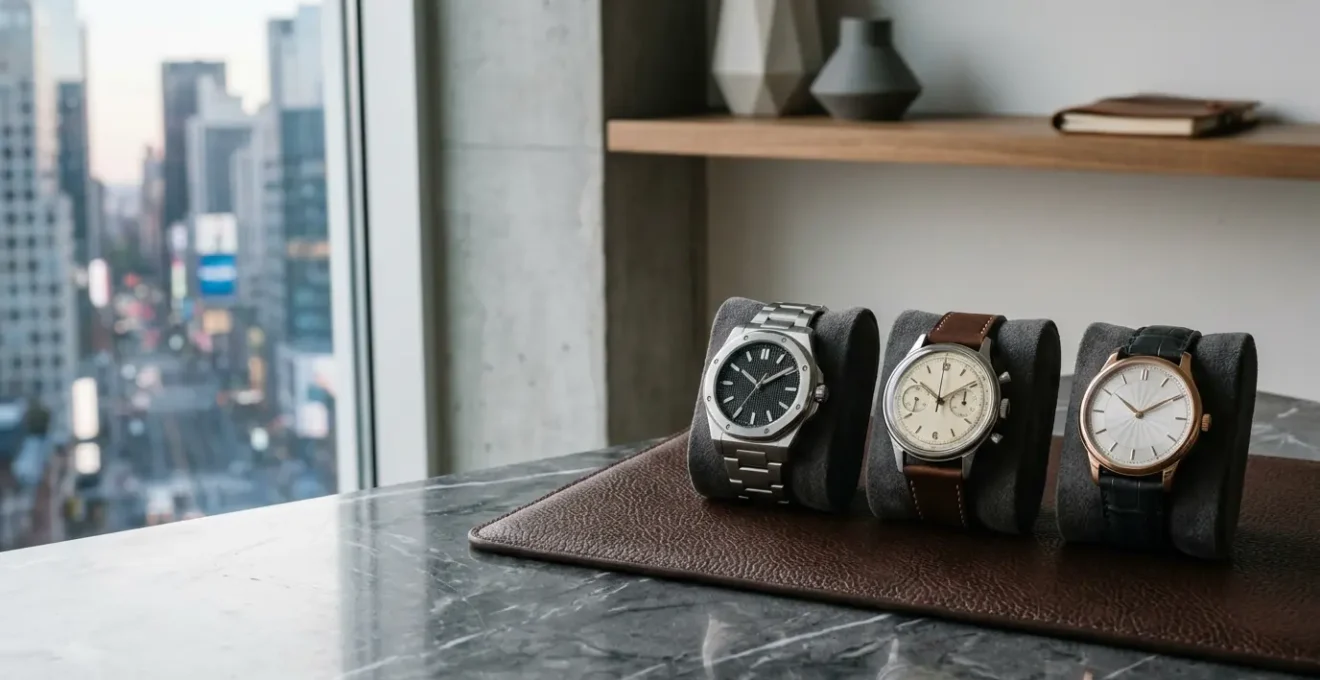
The true value of a sub-£2,000 watch isn’t its potential resale price, but its incredibly low ‘cost-per-wear’ and its power to silently elevate your entire personal brand.
- Value is measured in durability, versatility, and the confidence it provides, not just market fluctuation.
- A quality timepiece is the cornerstone of a coherent “accessory ecosystem” that signals attention to detail.
Recommendation: Prioritise timeless design from heritage brands and focus on quality materials; this is a smarter investment than chasing trendy, disposable fashion.
The journey to acquiring your first “serious” timepiece is a rite of passage. It often begins with a question that echoes across countless online forums and jeweller’s counters: “Which watch under £2,000 will hold its value?” This question sends aspiring collectors down a rabbit hole of resale charts, brand tier lists, and heated debates about limited editions. The pursuit becomes a hunt for a unicorn asset, a wearable investment that might, one day, turn a profit.
But what if this entire conversation about resale value is a distraction? What if the most crucial metric for a watch in this price range isn’t what someone else will pay for it in the future, but what it’s worth to you, every single day you wear it? The real, tangible value lies in a concept collectors call Cost-Per-Wear (CPW). A £1,500 watch worn 3,000 times over a decade costs you just 50p per day. A £50 fashion watch that breaks or goes out of style in six months has an infinitely higher real cost.
This article shifts the focus. We will not be listing models. Instead, we’ll deconstruct the very idea of “value” by exploring the ecosystem of a well-dressed man’s life. Through the lens of belts, briefcases, and even bank loans, we will build a new framework for choosing a timepiece. This is a guide to selecting a watch that becomes a part of you, enhances your credibility, and delivers profound value far beyond the numbers on a sales receipt.
To navigate this fresh perspective on horological value, this article explores the interconnected world of men’s style. Each section uses a different accessory to illustrate a core principle of long-term value, helping you build a smarter purchasing mindset.
Contents: A New Framework for Watch Value
- Black or Brown: Which Leather Belt Is More Versatile for a Grey Suit?
- Briefcase or Backpack: Which Command More Respect in a Client Meeting?
- Scarf Tying Techniques: How to Look Dashing Not Strangled?
- The Metal Mistake That Turns Your Skin Green in 2 Days
- When to Upgrade Your Wallet: The Velcro Sound That Kills the Vibe
- Why a £300 Jacket Is Cheaper Than a £50 One Over 3 Years?
- The Debt Secret That Can Void Your Mortgage Application
- Stone Island or Moncler: Which Brand Holds Its Resale Value Better?
Black or Brown: Which Leather Belt Is More Versatile for a Grey Suit?
The most common style advice is to match your belt to your shoes. It’s simple, effective, and creates visual harmony. But this rule reveals a deeper truth: your accessories don’t exist in isolation. They are part of a system, an “accessory ecosystem.” A watch is the central star around which these other elements orbit. The question of a black or brown belt isn’t just about the suit; it’s about the entire outfit, and your watch is the anchor.
A black leather strap on a watch demands a black belt and black shoes. A brown strap opens up a world of versatility. According to style experts at Buckle My Belt, dark brown pairs with navy, grey, khaki, and a wider spectrum of shoe colours. This versatility directly translates to a lower Cost-Per-Wear for both your belt and your watch. A watch with an easily interchangeable strap (or a versatile steel bracelet) becomes a “smarter” investment because it integrates seamlessly into more of your wardrobe, maximising its use.
Before buying a watch, you must consider its place within your existing ecosystem. Does it complement your go-to shoes? Your favourite briefcase? A watch that clashes with 80% of your wardrobe is a “valuable” item that will spend most of its life in a drawer. That’s not an investment; it’s a decoration. True value is found in daily utility and seamless integration.
Action Plan: The Accessory Ecosystem Audit
- Match Leather to Leather: Always match your belt leather to your shoes first. This creates visual cohesion and is the foundation of a polished look.
- Coordinate with Your Watch Strap: If you are wearing a watch with a brown leather strap, your belt should also be brown. This creates a powerful, intentional link between your wrist and your waist.
- Consider the Formality Spectrum: Black is traditionally for more formal occasions, evening events, and charcoal suits. Brown is the king of daytime business and pairs beautifully with light grey, navy, and blue suits.
- Introduce a Third Option: Oxblood or burgundy leather is the secret weapon of versatility, pairing well with both black and brown shoes, offering ultimate flexibility.
- Match the Finish: The final touch of mastery is matching the leather finish. Polished, shiny shoes require a polished belt, while a matte or suede shoe pairs best with a similar belt texture.
Briefcase or Backpack: Which Command More Respect in a Client Meeting?
Imagine two consultants arriving to pitch for a major contract. One carries a sleek leather briefcase. The other wears a high-end tech backpack. Both are functional, both are premium, but they send vastly different signals. This isn’t about snobbery; it’s about understanding the psychology of professional perception. Your watch plays by the same rules.
The choice of what you carry is a form of “silent signalling.” It communicates your values, your industry, and your self-perception before you even speak. A survey by Style and Business Magazine revealed that 72% of respondents associated briefcase carriers with leadership qualities like authority and seriousness. The briefcase signals tradition, structure, and respect for the environment. The backpack signals modernity, agility, and a tech-first mindset.
Now apply this to your wrist. A classic, understated mechanical watch from a heritage brand is your briefcase. It signals an appreciation for craftsmanship, permanence, and tradition. A flashy, oversized, or tech-heavy smartwatch can be the equivalent of a backpack in a boardroom—perfectly acceptable in some contexts (a tech startup) but potentially jarring in others (a law firm). Choosing a watch that holds its “value” is about selecting the right signal for the rooms you want to be in.
This table breaks down the professional impact, a logic that applies directly to your choice of timepiece.
| Factor | Briefcase | Backpack |
|---|---|---|
| Professional Perception | Classic, executive, formal | Modern, casual, tech-savvy |
| Industry Fit | Law, finance, consulting | Tech, creative, startups |
| Comfort Level | Single-hand carry strain | Even weight distribution |
| Document Protection | Superior for papers | Better for tech gear |
| Suit Preservation | No wrinkles | Can cause back creases |
Scarf Tying Techniques: How to Look Dashing Not Strangled?
There’s an Italian concept that every aspiring stylish man should know: sprezzatura. It is the art of studied carelessness, of making something difficult look effortless. It’s the perfectly imperfect pocket square, the jacket casually draped over a chair, or the scarf tied in a way that looks both elegant and completely spontaneous. This principle is the soul of true style and is directly linked to the value of a great watch.
A certain nonchalance, so as to conceal all art and make whatever one does or says appear to be without effort and almost without any thought about it.
– Baldassare Castiglione, The Book of the Courtier – Definition of Sprezzatura
A loud, ostentatious, diamond-encrusted watch screams “I am trying very hard to show you I have money.” It is the opposite of sprezzatura. A classic dive watch on a worn-in strap, subtly peeking out from under a cuff, is the embodiment of it. It suggests a man of action and taste who isn’t seeking validation. The value of the watch isn’t in its price tag, but in its ability to contribute to this air of effortless confidence.
Choosing a watch that holds value, in this context, means picking a piece with a story and a purpose beyond bling. A pilot’s watch, a field watch, a classic dress watch—these are archetypes rooted in function. Their design has been honed over decades, not cooked up by a marketing team last season. They possess an inherent, un-buyable cool. This is the “dashing, not strangled” look we should all aspire to; a style that seems natural and innate.
Just as with a scarf, the goal with a watch is to achieve a look that is intentional but not forced. The piece should complement your personality, not overwhelm it. The real value is in finding a watch that feels so right, it looks like it has always been a part of you.
The Metal Mistake That Turns Your Skin Green in 2 Days
Nothing destroys the illusion of quality faster than a cheap metal accessory. We’ve all seen it: the £50 bracelet or watch that leaves a green or black stain on the skin after a single day in the sun. This is the most visceral and immediate evidence of poor material choice. It is a false economy, and the perfect illustration of why initial price is the worst measure of value.
The “green skin” phenomenon is caused by the oxidation of base metals like copper or nickel used in cheap plating. When you invest in a quality timepiece, you’re not just buying a brand name; you’re buying superior materials that are designed for longevity and biocompatibility. Surgical-grade 316L stainless steel, titanium, or solid precious metals don’t just look better—they feel better and are safer for your body. This is a non-negotiable component of true value.
The financial logic is undeniable. As some investment analysis shows, a quality hypoallergenic watch worn daily will have a far lower Cost-Per-Wear than a cheap, skin-staining accessory that you can only tolerate twice before discarding. The £1,500 watch might feel like a huge expense, but it is an investment in durability, comfort, and self-respect. The £50 watch is, in reality, a disposable item with a very high “cost per embarrassment.”
Action Plan: Safe Metal Hierarchy for Long-term Wearability
- Surgical Steel (316L): The gold standard for affordable, hypoallergenic, and highly durable watch cases and bracelets.
- Titanium: Lighter and stronger than steel, exceptionally corrosion-resistant, and considered one of the best options for very sensitive skin.
- Sterling Silver (925): A classic and beautiful choice, but it is softer than steel and requires regular polishing to prevent tarnish.
- Gold (14k minimum): The ultimate in prestige, but ensure the alloy is nickel-free if you have sensitivities. Higher karats are softer.
- Avoid at All Costs: Any watch described with “nickel plating,” “copper alloy,” “brass,” or unspecified “base metals.” These are the primary culprits for skin irritation and discolouration.
When to Upgrade Your Wallet: The Velcro Sound That Kills the Vibe
There are certain sounds that can instantly shatter a carefully crafted image of sophistication. The cringe-inducing rip of a Velcro wallet in a quiet restaurant is chief among them. It’s a juvenile sound, a relic of a past life. Your wallet, like your watch, is a daily-use item that speaks volumes about your transition into adulthood and your appreciation for quality that lasts.
A quality leather wallet, much like a quality mechanical watch, is designed to age gracefully. It develops a unique patina—a soft sheen and subtle darkening of the leather that comes from years of handling. This patina tells a story. It’s a physical record of your life, your travels, your daily routines. A cheap, mass-produced wallet or a nylon one simply degrades. It cracks, fades, and falls apart.
This is where “value” transcends mere function. The value of a quality watch is not just in its ability to tell time, but in its capacity to become a personal legacy item. The tiny scratches on the case from a memorable trip, the way the leather strap has molded perfectly to your wrist—these are marks of a life lived, not defects. When you choose a watch with a timeless design and robust construction, you’re choosing an object that will get better with age, just like a fine wallet or a good pair of leather boots.
Think of it this way: are you buying a disposable gadget or a future heirloom? A watch that can develop a patina, that can be serviced and passed down, holds a form of value that a smartwatch, destined for obsolescence in three years, can never achieve. It’s the difference between a fleeting vibe and enduring character.
Why a £300 Jacket Is Cheaper Than a £50 One Over 3 Years?
The logic of Cost-Per-Wear becomes crystal clear when you apply it to clothing. A £50 fast-fashion jacket might seem like a bargain, but it’s often a trap. The trend-driven design means it will look dated in six months. The cheap materials and construction mean it likely won’t survive more than a season or two of regular wear before it pills, tears, or loses its shape. You’ll soon find yourself buying another, and another.
A £300 jacket from a reputable brand, however, is built on a different philosophy. It features a timeless design, durable materials, and quality construction. It can be repaired. It holds a portion of its initial price on the resale market. When you do the maths over a three-year period, the “expensive” jacket is often the cheaper, smarter, and more sustainable choice.
This exact logic is the most powerful argument for investing in a quality timepiece. A sub-£2,000 watch from a brand like Tissot, Hamilton, or Longines is your £300 jacket. It has a timeless design that won’t look silly in a decade. It’s powered by a robust mechanical movement that a skilled watchmaker can service for generations. It holds its value exceptionally well, not because it’s a speculative asset, but because its inherent quality and brand heritage create a stable secondary market. A £150 fashion watch is the £50 jacket: disposable, trendy, and ultimately, a waste of money.
The following analysis of jacket ownership costs can be applied, principle for principle, to your watch purchase. It’s a framework for thinking like an investor, not a consumer.
| Factor | £50 Fast Fashion Jacket | £300 Quality Jacket |
|---|---|---|
| Initial Cost | £50 | £300 |
| Replacements (3 years) | 4 jackets = £200 total | 0 replacements |
| Repairs Possible | No – disposable construction | Yes – £30 estimated |
| Resale Value | £0 | £100-150 |
| Net Cost After 3 Years | £200 | £180 (after resale) |
| Style Longevity | 6 months (trend-based) | 10+ years (timeless) |
The Debt Secret That Can Void Your Mortgage Application
Here is a sobering truth that connects the worlds of high fashion and high finance: when you apply for a significant loan, like a mortgage, lenders scrutinize your bank statements. They are not just looking at your income and savings; they are building a psychological profile of you as a financial actor. Your spending habits tell a story, and the wrong story can get your application denied.
A statement littered with frequent, small “buy now, pay later” purchases for trendy fashion items can be a red flag. It can signal impulsivity and poor financial discipline. As one financial advisory expert noted in a Mortgage Application Analysis, “Lenders scrutinize spending on high-end fashion or frequent small ‘buy now, pay later’ purchases as a sign of poor financial discipline.” In this context, how does the purchase of a £1,500 watch look?
This is where the narrative you’ve built around your purchase becomes critical. A single, considered purchase of a high-quality item from a heritage brand, paid for with saved funds, tells a completely different story. It signals maturity, an appreciation for lasting value, and a rejection of disposable consumerism. It can be framed as an investment in your professional image and a store of value, much like a piece of art or jewellery. It demonstrates that you are a discerning buyer, not an impulsive spender. Your £1,500 watch can actually make you look *more* financially responsible than someone who spends the same amount over a year on twenty pieces of fast fashion.
The key is to transform a potential style liability into a financial asset. This requires a strategic approach to purchasing and documenting your luxury goods, treating them as part of your long-term asset portfolio, not as fleeting expenses.
Key Takeaways
- The best measure of value for a watch under £2,000 is its ‘Cost-Per-Wear’, not its potential resale price.
- A quality timepiece is the anchor of your “accessory ecosystem”; its value is magnified by its versatility with your wardrobe.
- Choosing heritage over hype and timeless design over fleeting trends is the smartest long-term investment strategy in this price bracket.
Stone Island or Moncler: Which Brand Holds Its Resale Value Better?
In the world of luxury outerwear, a fascinating battle exists between “hype” and “heritage.” Stone Island, with its innovative fabrics and cult following, represents the power of hype. Its value can soar based on specific collaborations or drops, but it can also be volatile, tied to the ever-changing tides of streetwear trends. Moncler, particularly its classic Maya jacket, represents heritage. It has a decades-long history, an iconic status, and its value is stable, predictable, and less susceptible to fashion’s whims.
This is the final, and perhaps most important, analogy for choosing your watch. The watch market under £2,000 is filled with both “hype” brands (new microbrands with exciting designs) and “heritage” brands (Tissot, Seiko, Hamilton, Longines). While a microbrand might offer a thrilling design, its long-term value—both financial and stylistic—is an unknown quantity. Will the company exist in 10 years to service the watch? Will the design look dated in three years?
Heritage brands, like Moncler, offer a powerful guarantee. Their long history provides a deep well of design archives, ensuring their modern pieces are rooted in timeless aesthetics. Their global presence ensures that service and repairs will be available for decades to come. Their established brand equity creates a liquid and stable secondary market. You may not make a life-changing profit selling a Tissot PRX or a Hamilton Khaki Field, but you are almost guaranteed to recoup a significant portion of your initial investment, a luxury not afforded by most consumer goods.
Choosing a watch that holds its value is, therefore, a vote for heritage over hype. It’s an acknowledgement that true, lasting value is built over decades of consistent quality, not in a single season of marketing buzz. It is the final piece of the puzzle, confirming that a “safe” choice is often the smartest and, ultimately, the most rewarding one.
Now that you have a comprehensive framework for “value,” the next logical step is to audit your own accessory ecosystem. Look at your shoes, belts, and daily carry with this new lens, and identify where a quality timepiece would fit. This isn’t just about buying a watch; it’s about making a strategic investment in your personal brand. Begin the process today by evaluating your needs not for the man you are, but for the man you are becoming.