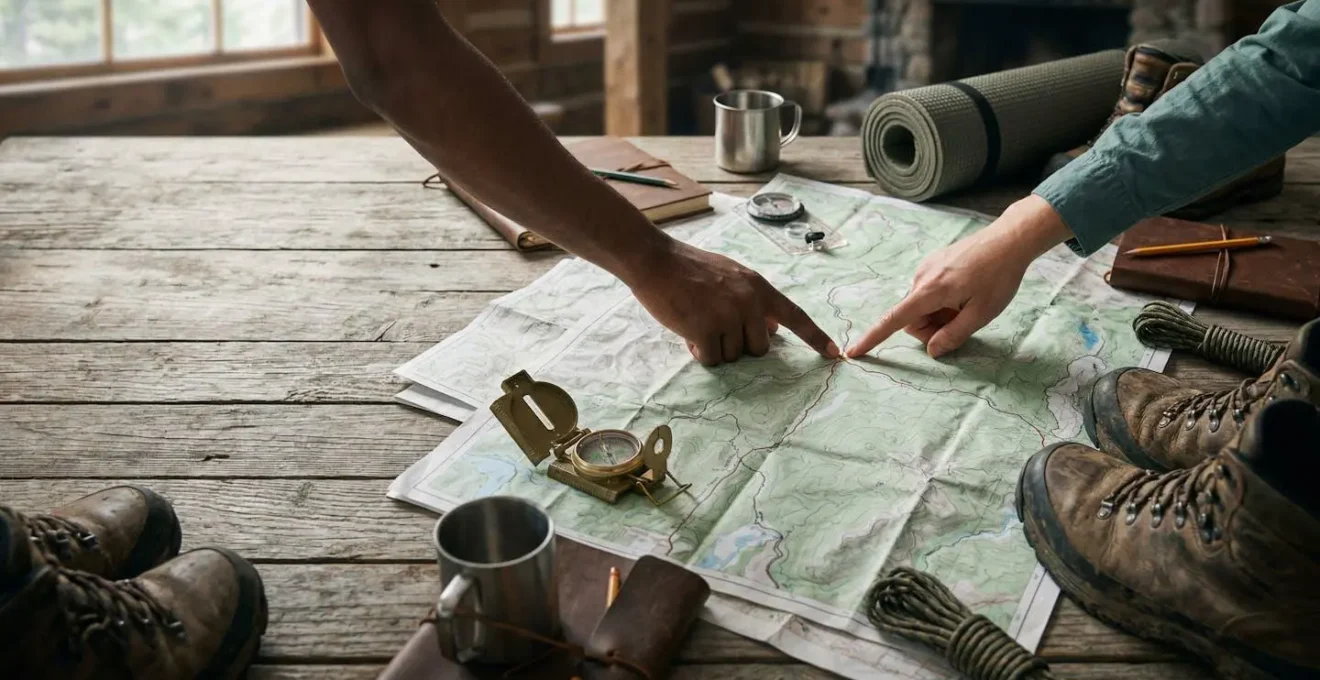
The key to a great couple’s hobby isn’t finding something you both already like, but engineering a shared experience that creates positive “bonding friction.”
- Challenging activities that require teamwork (often called “Type 2 Fun”) build more trust and connection than comfortable, passive ones.
- A healthy “relationship diet” involves balancing high-energy, novel adventures with calm, restorative activities to prevent boredom and burnout.
Recommendation: Stop searching for a perfect overlap in your existing interests and start designing shared adventures that will tell a unique story about your relationship.
Remember that Saturday night? The one spent scrolling endlessly through streaming services, trying to agree on a movie, only to give up and re-watch something you’ve both seen a dozen times. This familiar scene is a perfect metaphor for how many couples approach finding a shared hobby. We’re told to communicate, make lists, and find a compromise. This often leads to bland, safe choices that don’t truly excite either partner, turning “us time” into just another routine.
The common advice focuses on finding a pre-existing overlap in interests. But what if the goal isn’t to find common ground, but to build it from scratch? What if the most powerful bonding doesn’t happen in comfort, but in shared challenge? This guide is built on a different premise: the secret to a hobby you’ll both love lies in engineering experiences that create what we’ll call “bonding friction”. It’s the positive, character-building struggle that forges a unique connection and creates memories that last far longer than any dinner date.
Instead of just listing activities, we’ll explore the psychology behind why certain experiences bring you closer. We’ll look at everything from the surprising joy of a difficult hike to the collaborative grace of a dance class. Prepare to rethink what a “couple’s hobby” can be and discover how to intentionally design adventures that deepen your bond, build resilience, and inject a powerful dose of fun back into your relationship.
Summary: A Guide to Choosing Hobbies That Forge a Deeper Connection
- Why a Muddy Hike in the Peaks Bonds You Faster Than a Dinner Date?
- How to Plan a Surprise Weekend in Cornwall Without Logistical Nightmares?
- Tennis or Salsa: Which Activity Reduces Relationship Conflict?
- The Mistake of Forcing Her to Love Golf That Ruins Your Saturdays
- When to Schedule ‘Us Time’: The Sunday Night Ritual That Saves Marriages
- Ibiza or The Highlands: Which Destination Actually Helps You Find Clarity?
- May or September: Which Month Offers Best Weather and Lower Prices?
- How to Plan Your First Solo Trip to Scotland to Reset Your Mindset?
Why a Muddy Hike in the Peaks Bonds You Faster Than a Dinner Date?
The best relationships aren’t built on a foundation of easy, comfortable moments. They’re forged in shared challenges. This is the essence of “Type 2 Fun,” a concept that flips the idea of enjoyment on its head. Unlike “Type 1 Fun” (enjoyable in the moment, like eating ice cream), Type 2 Fun involves an activity that is strenuous, uncomfortable, or even miserable while it’s happening. Think of a grueling hike in the pouring rain or navigating a confusing trail. The fun doesn’t come during the event, but from the immense satisfaction and cherished memories created once it’s over. The shared experience of overcoming adversity creates an incredibly powerful bond.
This isn’t just a feeling; it’s backed by research. Studies on novel and arousing activities show that couples who engage in them can experience 70-90% greater relationship satisfaction compared to those who stick to mundane tasks. When you’re both covered in mud, laughing at a wrong turn, you’re not just hiking; you’re building a story of resilience. This “bonding friction” is the secret ingredient missing from most dinner dates.
Look at the image above. The caked-on mud and worn leather aren’t signs of a ruined day; they are trophies of a shared accomplishment. Each muddy step was a micro-challenge you faced together. This is why a difficult outdoor adventure often does more for a relationship than a five-star meal. You’re not just consuming an experience; you’re creating one, together, against the odds.
How to Plan a Surprise Weekend in Cornwall Without Logistical Nightmares?
A surprise trip is the ultimate expression of “experience engineering.” It’s an act of crafting a novel adventure designed specifically to delight your partner and break the routine. But the fear of logistical failure—missed bookings, spoiled surprises, or bad weather—can be paralyzing. The key is to plan for spontaneity, building a flexible framework that leaves room for magic while minimizing risk. It’s less about a rigid itinerary and more about creating a container for a shared adventure.
Start by becoming a digital ghost. Use your browser’s incognito mode for all research to prevent targeted ads from ruining the surprise. Create a shared calendar event simply labeled “Us Time” to block out the dates without revealing any details. When it comes to bookings, prioritize flexibility. Many hotels and transport services now offer options with free cancellation up to 24 hours before, which is your safety net against unforeseen issues. This approach transforms planning from a source of stress into a fun, clandestine operation.
The reveal is just as important as the trip itself. Instead of a simple announcement, turn it into a game. As this comparative analysis of surprise methods shows, building anticipation can significantly heighten the excitement.
| Reveal Method | Build-Up Time | Excitement Level | Effort Required |
|---|---|---|---|
| Surprise Box with Clues | 1-2 weeks | High | Medium |
| Progressive Text Clues | 3-5 days | Medium | Low |
| Scavenger Hunt | 1 day | Very High | High |
| Simple Announcement | Instant | Low | Minimal |
Choosing a method like a scavenger hunt or a series of progressive clues turns the days leading up to the trip into part of the experience itself. A surprise weekend isn’t just a gift of travel; it’s a demonstration of thoughtfulness, effort, and a shared desire for adventure.
Tennis or Salsa: Which Activity Reduces Relationship Conflict?
When choosing an activity, it’s easy to focus on the “what” and ignore the “how.” But the dynamic of the activity—competitive versus collaborative—has a profound impact on your relationship. A competitive hobby like tennis can be fun, but it inherently creates a winner and a loser. This can sometimes fuel tension, especially if one partner is significantly more skilled. In contrast, a collaborative hobby like salsa dancing requires you to work together towards a shared goal: synchronicity, rhythm, and a beautiful dance.
In salsa, you’re not opponents; you’re partners. You must rely on non-verbal cues, trust, and mutual support. This dynamic fosters a different kind of connection. Research from the Journal of Personality and Social Psychology highlights that such novel activities trigger a powerful biological response. As Aron et al. explain, this kind of engagement promotes a key element for connection:
Couples who engage in novel and exciting activities together experience increased levels of oxytocin, often referred to as the ‘love hormone’. This hormone plays a crucial role in bonding and attachment, promoting feelings of trust, empathy, and intimacy.
– Aron et al., Journal of Personality and Social Psychology
This collaborative environment also provides a safe space to practice better communication. When you’re learning a new step and it’s not working, you’re forced to communicate without blame. Using “I” statements (“I’m feeling a bit lost on this turn”) instead of “you” statements (“You’re leading me wrong”) becomes natural. This simple shift in language can have a huge effect, with some studies showing as much as a 30% reduction in explosive conflicts when couples adopt this habit.
The goal isn’t to eliminate competition entirely, but to balance it with activities that require you to be on the same team. Whether it’s salsa, cooperative board games, or a cooking class, these activities train you to be better partners, not just better players.
The Mistake of Forcing Her to Love Golf That Ruins Your Saturdays
One of the fastest ways to kill the joy of a shared hobby is to force it. Dragging your partner to an activity they secretly despise, whether it’s golf, fishing, or art museums, creates resentment, not connection. True bonding comes from authenticity, not forced compliance. The assumption that a happy couple must share all their interests is a myth. In reality, healthy relationships thrive on a balance of shared experiences and individual passions.
A useful mental model is the “Hobby Venn Diagram.” Imagine two overlapping circles, one for each of you. The overlapping section represents your shared interests—the activities you both genuinely enjoy. But the non-overlapping parts are just as important. They represent the individual hobbies and passions that make you who you are. Trying to force everything into the middle erases individuality and can lead to frustration. As one person insightfully noted about their marriage, appreciating the parts that don’t overlap is just as vital as enjoying the parts that do. The goal is to find the sweet spot in the middle, not to drag one circle completely over the other.
So, how do you find that authentic overlap without guesswork and painful trial-and-error? It requires a deliberate, no-pressure approach to exploration. Instead of pushing for a ‘yes’ on your favorite hobby, you can conduct a simple audit to uncover genuine mutual interests.
Your Audit for Authentic Shared Interests
- Individual Brainstorm: Each partner separately lists 10 personal interests, from dream activities to simple pleasures, without consultation.
- Categorize Your Lists: Review your own list and sort each item into one of three categories: ‘Love’ (genuinely passionate about), ‘Tolerate’ (willing to try/do occasionally), and ‘Never Again’ (a hard no).
- Find the Overlap: Compare your categorized lists. The goal is to find activities that you both placed in ‘Love’ or, at a minimum, that one of you ‘Loves’ and the other can ‘Tolerate’.
- The Monthly Experiment: Commit to testing one new shared activity from your ‘overlap’ zone each month. The only commitment is to that single experience—no pressure to make it a permanent hobby.
- Celebrate Differences: Acknowledge and encourage each other’s individual hobbies. Having separate interests brings unique perspectives back into the relationship, keeping things fresh and interesting.
This process removes the pressure and turns the search into a fun, collaborative game. It respects both partners’ individuality while creating a structured way to discover new things you can genuinely enjoy together.
When to Schedule ‘Us Time’: The Sunday Night Ritual That Saves Marriages
In the chaos of modern life, “quality time” often becomes an afterthought, squeezed in between work deadlines, chores, and social obligations. The vague promise of “let’s do something this weekend” rarely materializes. The solution isn’t to have more free time; it’s to be more intentional with the time you have. The most successful couples treat their time together with the same importance as a crucial work meeting. They schedule it, protect it, and build rituals around it.
A “Sunday Night Ritual” is a perfect example of such a protected activity. It could be anything from a weekly board game night, a walk without phones, or planning the week ahead over a glass of wine. The specific activity is less important than its consistency. Research on relationship rituals shows that consistency matters more than perfection. Couples who establish these regular connection habits, even simple ones, report significantly higher relationship satisfaction over time. This protected time acts as an anchor in a busy week, a guaranteed moment to reconnect and sync up.
This isn’t just about feeling good; it’s a proven strategy for relationship health. Prioritizing regular, scheduled “date nights” or rituals is directly linked to positive outcomes. Consistent quality time is one of the strongest predictors of happy relationships, as couples who do this report higher relationship satisfaction and lower stress levels. By scheduling “us time,” you’re sending a powerful message to each other: “Our connection is a priority, and I will make time for it, no matter what.”
This ritual doesn’t need to be elaborate or expensive. The power lies in its unbreakability. It’s a non-negotiable appointment in your calendar that you both honor. It’s a quiet declaration that, even when life gets hectic, your partnership comes first.
Ibiza or The Highlands: Which Destination Actually Helps You Find Clarity?
Not all travel is created equal. The destination you choose has a direct effect on your brain chemistry and, consequently, on the type of bonding you experience. Understanding this allows you to “prescribe” a trip based on your relationship’s needs. Are you stuck in a rut and need a jolt of excitement, or are you both burned out and craving quiet connection? This is the difference between a dopamine-driven trip and a serotonin-driven one.
A high-energy, novelty-packed trip to a place like Ibiza is a dopamine-driven experience. Dopamine is the neurotransmitter of reward and motivation. The thrill of new sights, sounds, and exhilarating activities creates a shared rush, perfect for breaking monotony and reigniting a spark. On the other hand, a quiet, nature-based trip to the Scottish Highlands is a serotonin-driven experience. Serotonin is linked to feelings of well-being and calm. Immersing yourselves in awe-inspiring landscapes reduces stress and creates the mental space for deep conversation and reflection.
Neither is “better” than the other; they simply serve different purposes. The expert traveler learns to choose their destination based on the desired outcome, balancing their “travel diet” between excitement and recovery.
| Destination Type | Neurochemical Response | Best For | Relationship Benefit |
|---|---|---|---|
| High-Energy (Ibiza) | Dopamine-driven | Breaking monotony | Shared excitement and novelty |
| Nature-Based (Highlands) | Serotonin-driven | Stress recovery | Deep conversation and reflection |
| Adventure (Both) | Mixed response | Building resilience | Shared adventure and novelty is proven to rewire connection and deepen bonds. When you lean into a bit of excitement, you lean into trust, vulnerability, and mutual support. |
Ultimately, the most powerful experiences often blend both, creating a sense of adventure that builds lasting bonds. As Brandon Harding, Executive Director of Veterans in the Wild, notes, this combination is a potent recipe for connection:
It’s a recipe that can supercharge intimacy thanks to the blend of novelty, awe, and ‘type-two fun’—activities that are strenuous and challenging in the moment but create a sense of achievement and satisfaction once completed.
– Brandon Harding, Veterans in the Wild, Executive Director
May or September: Which Month Offers Best Weather and Lower Prices?
Once you’ve decided on the *type* of experience you want, the *timing* can make all the difference. Planning your adventures during the “shoulder seasons”—the months just before and after the peak tourist rush, like May and September—is a strategic move that offers a trifecta of benefits: better weather, smaller crowds, and significantly lower prices. This isn’t just about saving money; it’s about reducing logistical stress, which allows you to focus on what truly matters: connecting with each other.
May and September each offer unique advantages. May is the season of new beginnings, with long daylight hours (sunrise around 5:30 am, sunset near 8:30 pm in the UK) perfect for outdoor adventures. It’s the ideal time to visit gardens in full bloom or attend spring festivals, tapping into an energy of freshness and anticipation. In contrast, September carries a more reflective, mature energy. The sea has retained the summer’s warmth, making it perfect for coastal activities, while the start of autumn offers opportunities for harvest experiences and stunning photography tours. In both months, you can often save 30-50% on accommodation compared to peak rates.
The psychology of seasonal travel suggests these months align with different relationship goals. May, with its forward-looking energy, is perfect for couples celebrating a new chapter or milestone. September, with its cozy, savoring vibe, is ideal for deepening an existing connection and reflecting on the year. By choosing your timing deliberately, you can align the atmosphere of your trip with the emotional state of your relationship, making the experience feel even more resonant and meaningful.
Of course, shoulder season weather can be unpredictable. The key is to build a flexible itinerary. A good rule of thumb is to plan one backup indoor activity (like a museum, cooking class, or cozy pub visit) for every two outdoor plans. This way, a rainy day becomes a welcome change of pace rather than a disaster.
Key Takeaways
- Embrace “Bonding Friction”: Prioritize challenging activities (Type 2 Fun) that require teamwork, as they build more trust and create stronger memories than comfortable experiences.
- Engineer Your Experiences: Intentionally choose activities based on the desired outcome, balancing high-energy novelty (dopamine) with calm, restorative connection (serotonin).
- Protect Your Rituals: Schedule and honor consistent, non-negotiable “us time.” The regularity of the ritual is more important than the activity itself for maintaining a strong connection.
How to Plan Your First Solo Trip to Scotland to Reset Your Mindset?
It may seem counter-intuitive in an article about couple’s hobbies, but one of the most powerful things you can do for your relationship is to embrace “connected solitude.” While it’s true, as Psychology Today points out, that couples with shared interests tend to have healthier relationships, it’s equally true that you are two separate people. Nurturing your individuality isn’t selfish; it’s essential. A solo trip, planned with the right intention, can be a profound reset that allows you to return to the relationship with a renewed sense of self, energy, and perspective.
A solo trip to a place like Scotland isn’t about escaping your partner; it’s about exploring your inner landscape. The goal is to learn something about yourself that will ultimately benefit your partnership. This requires a framework for “Connected Solitude” to ensure the trip strengthens your bond rather than creating distance. Before you go, share your itinerary and create a small “mission” for each other—like finding a unique local craft to bring back. This creates a playful link while you’re apart.
During the trip, the focus is on quality of connection, not quantity. Instead of constant texting, agree to send just one meaningful photo each day, a small window into your experience. Dedicate ten minutes daily to journaling, specifically answering the question: “What am I learning about myself that will benefit us?” This practice transforms self-discovery into a gift you can bring back to the relationship. You’re not just having an adventure; you’re gathering insights to share.
The return is the most critical phase. Plan a dedicated “return ritual”—a special evening where you can share the stories and insights you’ve gained, free from distractions. This is where the solo journey enriches the couple’s journey. By embracing time apart, you reaffirm your trust and demonstrate that your bond is strong enough to allow for individual growth. You come back not as a lesser part of a whole, but as a more complete individual, ready to contribute even more to the partnership.
Stop waiting for the perfect hobby to appear on a list. Start by choosing your next adventure—whether it’s a muddy hike, a surprise weekend, or even a solo journey—and begin engineering the shared story that only the two of you can tell.