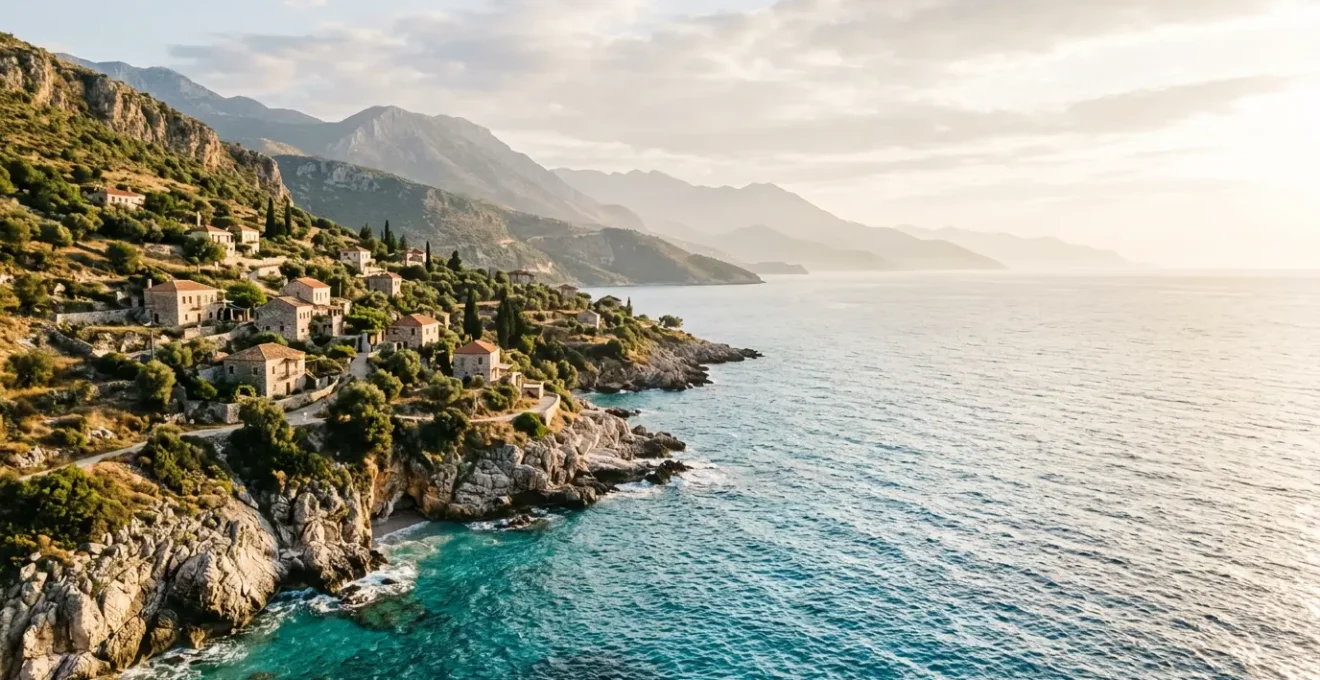
Albania isn’t just a budget alternative to Greece; it’s a strategic travel solution that solves the modern traveller’s biggest dilemmas.
- It offers the price points of Southeast Asia with the landscapes of South America, all within Europe’s reach.
- It provides a unique “Schengen Reset” for long-term travellers, effectively extending your time in Europe.
- It allows for ‘Experience Blending’—combining Ibiza-style nightlife and Scottish Highland-like solitude in a single trip.
Recommendation: Stop choosing between cost, experience, and convenience. Start thinking about Albania as the answer that gives you all three.
For the savvy UK traveller, the Mediterranean dream is becoming a recurring nightmare. You picture sun-drenched, empty beaches and authentic tavernas, but the reality is often overpriced resorts in Greece, packed Croatian coastlines, and a lingering feeling you’re on a well-worn tourist conveyor belt. You tell yourself this is the price to pay for sunshine and sea, a compromise you have to make. The usual advice is to just “go off-season” or “find a less popular island,” but this rarely scratches the itch for true discovery.
What if the problem isn’t the destination, but the choice itself? We’ve been conditioned to think in binaries: cheap but basic, or luxurious but expensive; party or quiet; beach or mountains. But what if the real secret, the ultimate travel hack, lies in a country that refuses to be categorised? This is where Albania enters the conversation. Not as “the new Greece” or a “hidden gem,” but as a strategic choice for those who are tired of compromising. It’s the answer for travellers who want to outsmart the system, not just find a cheaper flight.
This guide isn’t a list of top ten beaches. It’s a strategic dossier. We’ll dissect the tactical decisions that separate a good holiday from a transformative one: when to go for maximum value, how to navigate for true freedom, and how to use Albania as a launchpad for longer European adventures. We’ll even explore how it stacks up against legendary backpacking hubs and why learning just five Albanian words is more valuable than a full phrasebook.
To navigate this strategic guide to Albania, use the summary below. We’ll cover everything from the tactical timing of your visit to the cost-benefit analysis against global travel hotspots.
Summary: Why Albania Is a Strategic Travel Choice, Not Just a Destination
- May or September: Which Month Offers Best Weather and Lower Prices?
- Bus or Car Hire: Which Is Safer on Albanian Roads?
- The 90-Day Rule: How to Stay in Europe Without Overstaying?
- The Language Mistake That Gets You Ripped Off in Taxi Cabs
- When to Book Flights: The ‘Sweet Spot’ for Emerging Destinations
- Ibiza or The Highlands: Which Destination Actually Helps You Find Clarity?
- South East Asia or South America: Which Is Cheaper for 3 Months?
- How to Learn a Language in 3 Months Before Your Trip?
May or September: Which Month Offers Best Weather and Lower Prices?
The first strategic decision for any trip is timing. For established destinations, this is a simple trade-off: you sacrifice either weather or your budget. In Albania, the choice is more nuanced and far more rewarding. The “shoulder seasons” of May and September aren’t a compromise; they are arguably the country’s prime time, offering two distinct but equally brilliant experiences. This isn’t just about avoiding crowds; it’s about choosing your own adventure.
Choosing May is a vote for lush, active exploration. The mountains are a vibrant, cinematic green, perfect for hiking the famous Valbona to Theth trail before the summer heat settles in. Temperatures hover in the ideal 20-25°C range, and the cities, particularly Tirana, are alive with the optimism of spring. May flights are also frequently 20-30% cheaper than peak summer departures, representing your first act of ‘travel arbitrage’.
September, however, is the masterstroke for the savvy sun-seeker. The Adriatic Sea has been warmed by three months of sun, holding at a glorious 23-24°C. The summer crowds have vanished, but the vibrant coastal atmosphere remains. This is when you’ll find local harvest festivals celebrating wine and olives, offering a taste of authentic Albanian culture. Crucially, this is where the budget hack comes in: one analysis found that accommodation prices drop by 30-40% in September compared to the peak months of July and August. You get better weather than June, warmer seas, and a drastically lower bill.
Bus or Car Hire: Which Is Safer on Albanian Roads?
The next strategic choice is mobility. How you move through a country defines your experience, and in Albania, the debate between public transport and a rental car is more than a question of cost—it’s a question of freedom versus friction. The common wisdom paints Albanian roads as a chaotic free-for-all, but the reality on the ground is more about assertiveness than actual danger. The real risk isn’t accidents; it’s the missed opportunities that come from being tied to an often-unpredictable bus system.
Taking the bus is, without a doubt, the most budget-friendly option and a fantastic way to meet locals. However, it requires a level of patience and flexibility that can test even seasoned travellers. Schedules can be fluid, bus stops are not always clearly marked, and online information is often non-existent. It’s an adventure, but one that costs you time, your most valuable asset on any trip.
Case Study: Real Traveller Experiences on Albanian Transport
An analysis of traveller forums from 2024 reveals a strong consensus. Multiple visitors reported that navigating Albania without a car was “particularly challenging.” They cited unmarked bus stations and a complete lack of online schedules as major hurdles. While many found the local driving style intimidating at first, they concluded that the actual safety risk was low. The overwhelming verdict was that a rental car, despite its higher cost and the challenge of some mountain roads, provides a vastly superior experience, unlocking access to hidden beaches and remote villages that are simply unreachable by bus.
Hiring a car is a vote for ultimate freedom. It transforms your journey from a series of A-to-B transfers into a genuine exploration. You can stop at that roadside fruit stand, take a detour to a secluded beach you spotted from the coastal road, and travel on your own schedule. While local driving can be ‘assertive’, it’s a rhythm you quickly adapt to. The real consideration is choosing the right vehicle—avoid the smallest Dacia models if you plan to tackle the spectacular mountain roads of the south coast or the Albanian Alps.
The 90-Day Rule: How to Stay in Europe Without Overstaying?
For the long-term traveller or aspiring digital nomad, the Schengen Area’s 90/180-day rule is a constant headache. It forces a hard stop on European adventures, sending many on expensive flights to the UK or further afield to “reset” their clock. This is where Albania moves from a ‘nice to visit’ destination to a crucial piece of strategic travel infrastructure. As a non-Schengen country, it offers the perfect, affordable, and incredibly enjoyable solution: The Schengen Reset.
The concept is simple: when your 90 days in the Schengen zone are nearing their end, you simply cross the border into Albania. You can then spend up to 90 days (for UK citizens) exploring its mountains and coastline while your Schengen clock resets to zero. After your time in Albania, you are free to re-enter the Schengen Area for another fresh 90 days. This isn’t a loophole; it’s a legitimate way to extend your European journey. Albania’s visa policy is famously generous; as an example of its openness, Albania offers a one-year visa-free stay for US citizens, making it one of the most welcoming hubs in the region.
This strategy transforms a logistical problem into an incredible opportunity. Instead of a costly “visa run” to a boring airport hotel, you get a three-month adventure in a country with low living costs (monthly apartments in Saranda can be found for €300-500), a burgeoning digital nomad scene, and easy access to other non-Schengen Balkan nations like Montenegro and North Macedonia.
Your Action Plan: The 90-Day Schengen Reset Strategy
- Exit the Schengen Area before day 90 and enter Albania (a non-Schengen country).
- Establish your base: Rent a monthly, cost-effective apartment in vibrant Tirana or coastal Saranda.
- Handle local bureaucracy: If staying over 30 days, complete the simple registration process at a local police station.
- Explore the region: Use Albania as a hub to discover neighbouring Balkan countries via easy bus connections.
- Reset and re-enter: After 90 days in Albania, your Schengen clock is reset, allowing you to re-enter the EU for a new 90-day period.
The Language Mistake That Gets You Ripped Off in Taxi Cabs
In any new country, the first interaction is often with a taxi driver, and it’s a moment ripe for misunderstanding and overcharging. Most travellers, armed with a phrasebook, believe the key is to learn the words for “how much?” They think it’s a transactional problem. In Albania, this is the first and most common mistake. The issue isn’t what you say, but *how* and *when* you say it. The secret to fair pricing and a warm welcome isn’t in your vocabulary, but in your understanding of cultural etiquette.
The instinct is to get in, state your destination, and immediately ask “Sa kushton?” (How much?). This immediately flags you as a tourist focused solely on the transaction. It creates a defensive, impersonal dynamic. The real “hack” is to prioritise connection over transaction. It’s a simple, two-second gesture that reframes the entire interaction from a potential conflict to a human exchange.
The secret lies in a single word, delivered before anything else. It’s a word that costs nothing but is valued immensely. As one local expert points out, the key is the greeting.
The real mistake isn’t mispronouncing ‘how much?’ (‘Sa kushton?’), but asking it before a warm greeting. The key is to say ‘Mirëdita’ (Good day) first, making eye contact and smiling.
– Local Tourism Expert, Albanian Cultural Etiquette Guide
This simple act of saying “Good day” and making eye contact before stating your business changes everything. You are no longer just another fare; you are a polite visitor acknowledging their humanity. This small investment in cultural fluency pays immediate dividends, often resulting in a friendlier ride, helpful advice, and, yes, a much fairer price without the need for haggling.
When to Book Flights: The ‘Sweet Spot’ for Emerging Destinations
Booking flights has become a game of high-stakes digital chess. We’re told to book on a Tuesday, clear our cookies, and reserve months in advance. While this may hold true for established hubs like Athens or Rome, it’s the wrong strategy for an emerging destination like Albania. Applying the “mass market” rules to a niche destination is a costly mistake. The sweet spot for booking flights to Tirana is governed by a different set of principles: flexibility, awareness, and a bit of daring.
For one, the old rule of “book as far in advance as possible” doesn’t always apply. With new routes from UK airports being added by low-cost carriers like Wizz Air and Ryanair, a flight that doesn’t exist today might be your cheapest option in three months. The key is to set up alerts and be ready to act when a new route is announced, as airlines often launch with incredibly low introductory fares. This is especially true for the shoulder seasons; as we’ve seen, May flights can be 20-30% cheaper than summer, and booking them 6-8 weeks out is often the sweet spot.
Furthermore, the price variance isn’t as extreme as with major destinations. You’re less likely to see the dramatic last-minute spikes of a flight to Ibiza in August. This gives you more breathing room. Instead of panicking six months out, you can monitor prices with a calmer, more strategic approach. Consider flying into a neighbouring country like Corfu (Greece) and taking a short ferry to Saranda on the Albanian coast. This “back door” route can sometimes offer significant savings and adds another layer to your adventure. The strategy here is not about finding a magic booking day, but about expanding your options and understanding the market’s unique rhythm.
Ibiza or The Highlands: Which Destination Actually Helps You Find Clarity?
The modern traveller is often searching for more than just a tan. We seek “clarity,” a break from the noise of our daily lives. But the travel industry presents us with a false choice: do you find clarity through hedonistic release on a pulsating dance floor in Ibiza, or through quiet contemplation amidst the rugged, lonely beauty of the Scottish Highlands? We are forced to pick a tribe. But what if real clarity comes not from choosing one extreme, but from experiencing the contrast between them?
This is where Albania offers a profound and unexpected solution. It is “The Third Way”—a country that contains both Ibiza and the Highlands within its borders, allowing you to experience this powerful duality in a single, seamless journey. This is the concept of Experience Blending, and it’s a travel hack for the soul.
The Albanian Alps in the north, particularly the Valbona to Theth trail, offer a solitude and raw, majestic beauty that rivals anything in Scotland or New Zealand. Days spent hiking through the “Accursed Mountains” are a form of active meditation, a chance for deep contemplation against a backdrop of breathtaking peaks. This is the ‘Highlands’ experience. Then, a few hours’ drive south, you reach the Albanian Riviera. Here, the beach clubs of Saranda and Ksamil, and the vibrant nightlife of Tirana’s Blloku district, offer a Mediterranean energy that can rival the buzz of Ibiza, but with a unique Balkan flavour and at a fraction of the cost.
Case Study: The Albanian “Third Way” to Clarity
Travellers report that the true perspective shift comes from experiencing these two worlds in quick succession. A ten-day trip can begin with silent, meditative hikes in the mountains and end with celebratory, sun-drenched days on the coast. It’s this stark contrast—from isolated contemplation to communal celebration—that provides a more rounded, holistic sense of clarity than choosing just one extreme. This entire spectrum of experience is remarkably accessible, with recent tourism statistics showing an average spend of just €427 for a full-package experience.
South East Asia or South America: Which Is Cheaper for 3 Months?
For decades, the long-term budget traveller has faced a fundamental choice: the temples and beaches of Southeast Asia or the mountains and culture of South America? This decision has shaped countless gap years and digital nomad journeys. But in a post-pandemic world of rising flight costs and shifting economies, a new question must be asked: what if the best option is neither? What if the answer lies much closer to home, offering the best of both worlds?
This is the ultimate expression of travel arbitrage. Albania presents a compelling case as the overlooked third option that beats the traditional hubs on several key metrics. It combines the rugged, Andean-like landscapes of South America with the incredibly low price point of Southeast Asia, while adding the benefits of European proximity and safety standards. It’s a disruptive force in the world of budget travel.
A direct comparison of core expenses reveals a startling truth. While daily costs for food might be marginally cheaper in Thailand, when you factor in the cost of flights from the UK/Europe and the lack of visa run requirements, Albania emerges as a powerful contender, if not the outright winner for a three-month stay.
| Expense Category | Albania (Tirana) | Thailand (Chiang Mai) | Colombia (Medellín) |
|---|---|---|---|
| 1-Bedroom Apartment/Month | €300-500 | €350-600 | €400-700 |
| Daily Food Budget | €10-15 | €8-12 | €12-18 |
| Co-working Space/Month | €80-120 | €100-150 | €120-180 |
| Flight from EU/US | €50-200 (EU) | €600-1200 | €500-1000 |
| Visa Runs Required | None (for 90 days) | Every 30-60 days | Every 90 days |
| Total 3-Month Budget | €2,500-3,500 | €3,000-4,500 | €3,500-5,000 |
As one recent report on remote work destinations succinctly put it, the paradigm is shifting. The old assumptions no longer hold true.
What if the best option is in Europe? Albania offers South East Asia’s price point with South America’s rugged landscapes, all with European proximity and safety standards.
– Digital Nomad Community Report, Remote Work Destination Analysis 2025
Key Takeaways
- The Schengen Reset: Use Albania as a non-Schengen base to legally reset your 90-day EU travel clock.
- Travel Arbitrage: Get South American landscapes at Southeast Asian prices, all within a few hours of the UK.
- Experience Blending: Combine mountain solitude and coastal nightlife in a single, affordable trip—the “Third Way” to finding clarity.
How to Learn a Language in 3 Months Before Your Trip?
The idea of learning a language before a trip can feel daunting, often conjuring images of dusty textbooks and complex grammar. For a trip to Albania, this is the wrong approach. The goal is not fluency; it’s functional, strategic communication. Applying the 80/20 principle—focusing on the 20% of the language that will yield 80% of the results—can transform your trip, unlock local prices, and earn you immense respect. You don’t need to be a linguist; you need to be a strategist.
The most critical skill isn’t asking for directions, it’s understanding numbers. The ability to comprehend prices spoken back to you in Albanian (Shqip) is the single most powerful tool for avoiding “tourist pricing” in markets and taxis. This is the cornerstone of your 3-month plan. From there, you build outwards with high-impact vocabulary: greetings, pleasantries, and key food and drink phrases.
A focused, 12-week “sprint” could look like this:
- Weeks 1-2: Master the essentials. Focus exclusively on greetings like ‘Mirëdita’ (Good day), ‘Faleminderit’ (Thank you), and ‘Ju lutem’ (Please).
- Weeks 3-4: The Number Game. This is your most important module. Drill numbers 1-100 until you can recognise them instantly when spoken.
- Weeks 5-8: Practical Phrases. Learn how to order a coffee or a beer (‘Një birrë, ju lutem’), ask ‘Where is…?’ (‘Ku është…?’), and navigate a basic menu.
- Weeks 9-12: Scenario Practice. Use a service like iTalki for a few sessions with a native speaker, practicing specific scenarios like negotiating a taxi fare or ordering a meal. This builds confidence more than any app.
The impact of this minimal effort is disproportionately large. It’s not just about saving money; it’s about changing the dynamic of your interactions.
After just learning numbers 1-100 in Albanian before my trip, I saved approximately 30% on market purchases and taxi rides. The ability to understand prices spoken back to me in Albanian was far more valuable than any phrase book. Vendors immediately treated me with more respect and offered local prices when I could respond to their numbers in Albanian.
– Traveller Testimonial
Stop thinking of Albania as just another destination and start seeing it as a master key. It’s the tool that unlocks longer, richer, and more affordable travel in Europe. The next step isn’t just to book a flight, but to start thinking like a strategic traveller. Evaluate your travel goals, and see how Albania provides the solution.